
The traditional landscape of marketing has undergone a massive transformation, moving away from broad demographics toward a future where every interaction is uniquely tailored to the individual. In the past, businesses relied on basic segmentation, grouping customers by age, gender, or location, which often led to generic and uninspiring brand experiences.
Today, we are entering the era of hyper-personalization, a sophisticated strategy that leverages the immense power of Big Data and Artificial Intelligence to anticipate a consumer’s needs before they even voice them. This approach goes beyond simply using a customer’s first name in an email; it involves analyzing real-time behavior, purchase history, and even environmental context to deliver the perfect message at the perfect moment. As digital footprints grow larger, the ability to decode these signals becomes the ultimate competitive advantage for modern enterprises.
Companies that fail to adapt to this level of intimacy risk becoming irrelevant in a marketplace where consumers now expect brands to act as intuitive personal assistants. Hyper-personalization is not just a trend but a fundamental shift in how value is exchanged in the digital economy. By understanding the intricate patterns within Big Data, businesses can create a “market of one,” fostering deep loyalty and driving unprecedented levels of engagement. This article will explore the mechanics of hyper-personalization and how you can harness it to transform your customer journey into a predictive masterpiece.
The Core Difference: Personalization vs. Hyper-Personalization
To truly master this trend, one must first understand that standard personalization is now considered the bare minimum. While traditional personalization uses static data like “Customer X bought a shirt,” hyper-personalization uses dynamic data like “Customer X is browsing for shirts on a rainy Tuesday morning from a mobile device in Seattle.”
This level of detail allows brands to understand the intent behind the action rather than just the action itself. It creates a seamless bridge between the digital world and the human psyche, making the customer feel seen and understood on a visceral level.
A. Traditional methods rely on historical data that may be weeks or months old, often missing the current context.
B. Hyper-personalization utilizes real-time streams of information to adjust offers in milliseconds during a live session.
C. Behavioral triggers are used to send notifications based on specific movements, such as lingering on a product page for more than thirty seconds.
D. Predictive analytics shifts the focus from what the customer did yesterday to what they are most likely to do in the next hour.
E. Contextual awareness integrates external factors like local weather, current events, or even the battery level of the user’s device.
The Engine Room: How Big Data Fuels Prediction
The “Big” in Big Data refers to the volume, velocity, and variety of information flowing into a company’s servers every second. To turn this raw data into hyper-personalized experiences, businesses utilize machine learning algorithms that scan for patterns invisible to the human eye.
These algorithms can process millions of variables simultaneously, creating a “customer persona” that is constantly evolving. As the system gathers more data, its predictions become increasingly accurate, allowing for a level of service that feels almost magical to the end-user.
A. Data mining involves extracting hidden gems of information from massive sets of unstructured social media posts and web logs.
B. Machine learning models are trained to recognize the “buy signals” that precede a major purchase decision.
C. Natural Language Processing (NLP) allows AI to understand the sentiment behind customer reviews and support tickets.
D. Pattern recognition identifies groups of users with similar taste profiles to make “collaborative filtering” recommendations.
E. Data visualization tools help human managers understand the complex journeys that customers take across different platforms.
Real-Time Interaction: The Ultimate Goal
The holy grail of hyper-personalization is the ability to interact with a customer in real-time. Imagine a customer walking past a retail store and receiving a push notification for a discount on the exact pair of shoes they added to their online cart an hour ago.
This requires a highly integrated “tech stack” where the website, mobile app, and physical store are all talking to each other in a single unified language. When a brand can close the gap between desire and fulfillment in real-time, the conversion rates skyrocket.
A. Edge computing allows for data processing to happen closer to the user, reducing the lag in delivering personalized content.
B. Geofencing technology triggers marketing actions when a customer enters a specific geographic perimeter.
C. Real-time bidding (RTB) in advertising ensures that the ads shown to a user are relevant to their current browsing session.
D. Dynamic website content changes the layout and product displays of a homepage based on the visitor’s unique profile.
E. Instant feedback loops allow the system to learn immediately if a recommendation was successful or if it needs to pivot.
The Role of AI in Content Generation
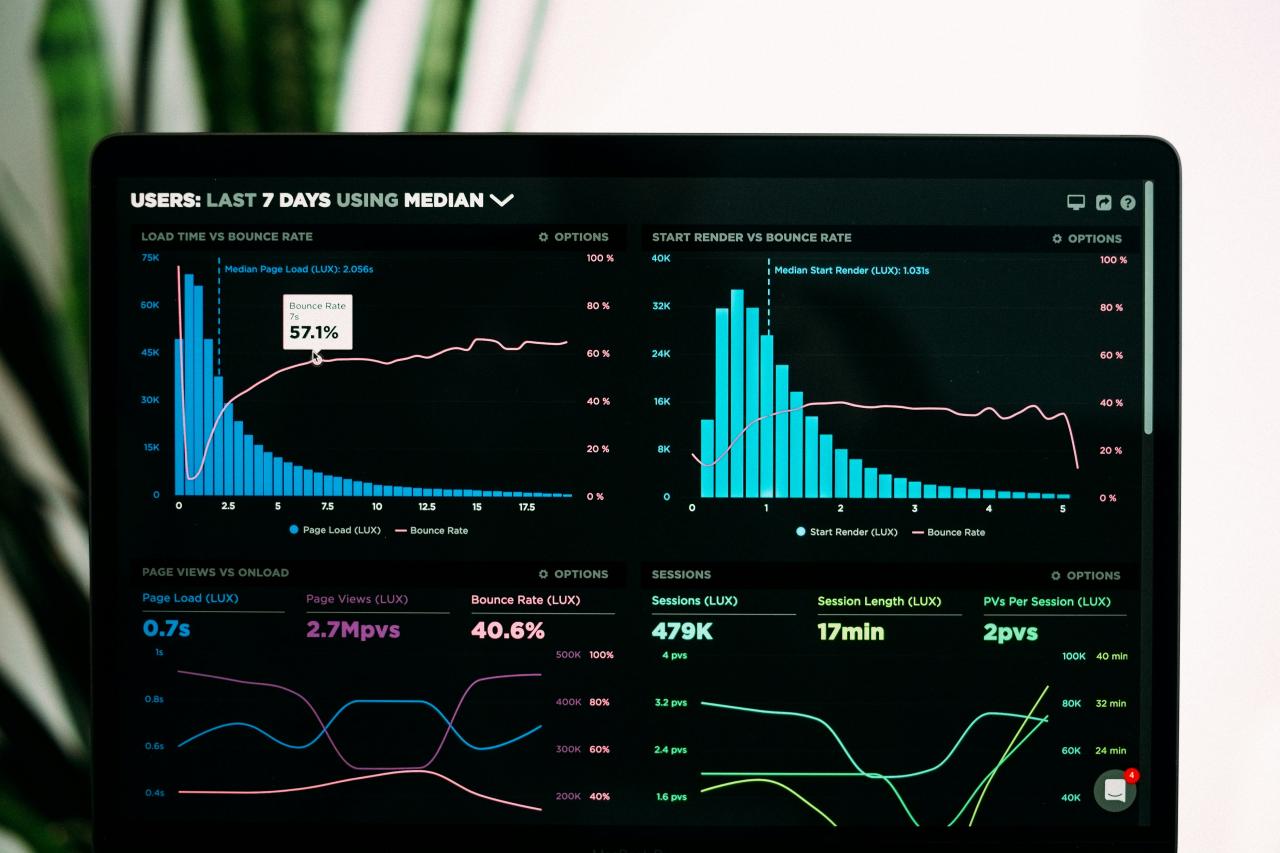
Creating a “market of one” requires a staggering amount of content that no human marketing team could ever produce alone. This is where Generative AI steps in, acting as a tireless creative engine that builds thousands of versions of an ad or email.
AI can customize the imagery, the tone of voice, and even the call-to-action to match the psychological profile of each individual recipient. This ensures that a “visual” person sees a beautiful photo, while a “data-driven” person sees a chart or a list of benefits.
A. Automated copywriting tools generate personalized subject lines that have been tested to appeal to specific personality types.
B. Dynamic creative optimization (DCO) adjusts the elements of a display ad in real-time to match the user’s interests.
C. Personalized video messages can be generated at scale, addressing the customer by name and showing products they like.
D. AI-driven layout design ensures that the user interface (UI) of an app adapts to the way an individual prefers to navigate.
E. Sentiment-based content adjustment changes the “vibe” of a brand message based on the customer’s recent interactions with support.
Loyalty in the Age of Prediction
Hyper-personalization is the strongest tool available for increasing Customer Lifetime Value (CLV). When a brand consistently provides value without the customer having to work for it, a powerful emotional bond is formed.
This leads to “anticipatory loyalty,” where the customer doesn’t even bother looking at competitors because your brand already knows what they want. It transforms the relationship from a series of transactions into a long-term partnership based on mutual understanding.
A. Subscription models can be hyper-personalized to adjust the delivery frequency based on the customer’s actual usage rate.
B. Loyalty programs can offer “surprise and delight” rewards that are specifically chosen based on the user’s past favorites.
C. Proactive customer service can reach out to fix a problem—like a delayed shipment—before the customer even checks the tracking number.
D. Community building is enhanced when brands connect like-minded customers based on their shared hyper-personalized profiles.
E. Re-engagement campaigns are timed perfectly to catch a customer just as they are starting to “churn” or lose interest.
The Ethics of Big Data and Privacy
With great power comes great responsibility, and hyper-personalization requires a delicate balance between being helpful and being “creepy.” Consumers are becoming more protective of their data, and trust is the most fragile currency in the digital age.
Transparency is key to maintaining this trust; brands must be clear about what data they are collecting and how it benefits the customer. When a user sees a clear “value-for-data” trade-off, they are much more likely to opt-in to personalized experiences.
A. Data privacy regulations like GDPR and CCPA provide a legal framework that businesses must follow to protect consumer rights.
B. First-party data strategies are becoming more important as third-party cookies are phased out by major browsers.
C. Opt-in transparency allows customers to choose exactly how much personalization they want to experience.
D. Ethical AI auditing ensures that algorithms aren’t making biased or discriminatory decisions based on sensitive data.
E. Data security measures, such as encryption and anonymization, are essential for preventing catastrophic data breaches.
Hyper-Personalization in Different Industries
While retail and e-commerce were the early adopters, hyper-personalization is now spreading to every sector of the economy. From healthcare to finance, the ability to predict needs is saving lives and protecting wealth.
In each of these industries, the goal remains the same: to remove friction from the human experience. As technology becomes more invisible and integrated, the “service” part of the business becomes more intuitive and proactive.
A. In healthcare, wearable devices provide Big Data that allows doctors to predict health crises before they occur.
B. The finance industry uses predictive models to offer personalized investment advice and fraud detection in real-time.
C. Travel and hospitality brands use hyper-personalization to build “dream itineraries” based on a traveler’s past adventures.
D. The automotive industry is developing cars that adjust seat positions, music, and routes based on the driver’s biometric data.
E. Education technology uses “adaptive learning” to tailor lessons to the specific speed and style of each student.
Building Your Hyper-Personalization Tech Stack
Transitioning to a predictive model requires a significant investment in the right technology. You need a Customer Data Platform (CDP) that can act as a “single source of truth,” pulling data from every possible touchpoint.
This CDP must then be connected to an “orchestration engine” that decides which message to send and where to send it. It is a complex ecosystem, but once built, it functions as a highly efficient and autonomous growth machine.
A. Customer Data Platforms (CDP) aggregate and clean data from social media, emails, and in-store purchases into one profile.
B. Orchestration engines use “if-this-then-that” logic to automate the delivery of personalized experiences across channels.
C. API-first architectures allow different software tools to communicate and share data in real-time without bottlenecks.
D. Real-time analytics dashboards give marketing teams a “god-view” of how their predictive models are performing.
E. Consent management platforms (CMP) ensure that all data used for personalization is gathered with the user’s explicit permission.
Overcoming the Implementation Hurdles
The road to hyper-personalization is filled with challenges, from “data silos” within the company to a lack of skilled AI talent. Many businesses struggle because their data is trapped in different departments that don’t talk to each other.
Breaking down these internal walls is a cultural challenge as much as a technical one. Leadership must prioritize a “data-centric” culture where every decision is backed by evidence and every team is aligned around the customer experience.
-
Start with a small, high-impact pilot project, like personalizing the email subject lines for your top 10% of customers.
-
Audit your current data quality, as “bad data” will only lead to “bad predictions” regardless of how good your AI is.
-
Hire or partner with data scientists who understand the nuances of consumer behavior as well as the mathematics of algorithms.
-
Focus on “low-hanging fruit” by automating the most repetitive and obvious personalization tasks first.
-
Continuously test and iterate your models, as customer preferences and market conditions are always in a state of flux.
The Future: From Prediction to Prescription
As we look toward 2030, hyper-personalization will move from “predictive” to “prescriptive.” This means that brands won’t just tell you what you might like; they will help you navigate your life to achieve your personal goals.
We are moving toward a world of “seamless commerce,” where products simply show up at your door just as you are running out, without you ever having to place an order. This is the ultimate fulfillment of the Big Data promise: a world where technology serves humanity with perfect, quiet efficiency.
A. Autonomous shopping agents will act as intermediaries, negotiating with brand AIs to get the best deal for the consumer.
B. Biometric integration will allow for personalization based on heart rate, mood, and stress levels in real-time.
C. The “Internet of Things” (IoT) will provide a constant stream of data from smart appliances, further refining the predictive models.
D. Augmented Reality (AR) will overlay personalized digital information onto the physical world as you walk through a city.
E. Universal ID systems may allow for a single personalized profile that follows a user across every brand and platform they use.
Conclusion

Hyper-personalization is the ultimate realization of a truly customer-centric business strategy in the modern age.
It represents a move away from seeing people as numbers and toward seeing them as unique individuals with complex needs.
The power of Big Data allows us to bridge the gap between digital coldness and human warmth in our interactions.
To succeed in this era, companies must prioritize data integrity and consumer trust above all other operational goals.
Predicting desires is not about manipulation but about providing genuine value and removing the friction from daily life.
The technology required to build these systems is becoming more accessible to businesses of all sizes every day.
We are standing at the beginning of a revolution that will redefine the relationship between brands and their audiences.
Every piece of data is a signal that, when decoded correctly, tells a story about a human being’s journey.
By mastering the art of the “market of one,” you ensure your business remains resilient in a rapidly changing economy.
The future belongs to the brands that can anticipate the next step before the customer even thinks to take it.
Step into the era of hyper-personalization today and transform your Big Data into a bridge toward lasting customer loyalty.